News
News on WindStars
March 02, 2022
Pre-Band: What, Who, & Why
Building upon what students have already learned from the recorder, pre-band allows them to extend their wind instrument learning without being overwhelmed by a full-sized band instrument.
Brittany Bauman | Updated August 8, 2025 | Article originally published on MusicConstructED
What Is Pre-Band?

Pre-band is the bridge in instrumental learning between the recorder and beginning band. The core goal of pre-band is to help all students achieve success playing a wind instrument using instruments that are specifically designed with beginners in mind. Building upon what students have already learned from the recorder, pre-band allows young learners to extend their wind instrument learning and confidence without being overwhelmed by a full-sized band instrument.
I think of pre-band a lot like training wheels on a bike; the goal isn’t to keep them there forever but is a tool to help ensure success later. Pre-band is not a recorder or beginning band replacement. Over the past decade, I’ve been intensively teaching and collaborating with other pre-band educators and the positive impact of pre-band programs has inspired me. I’ve seen the joy from both educators and students when fun, exploration, and student-centered learning can be core components of early instrumental learning.
Who Is Pre-Band For?
General Music
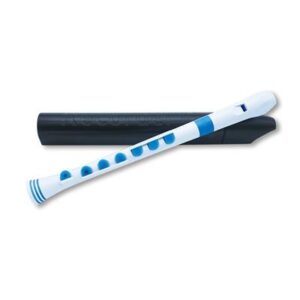
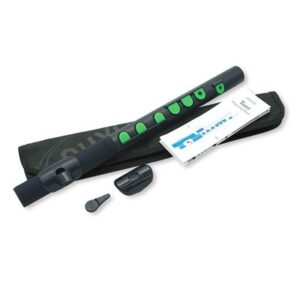
Pre-band programs used in a general classroom setting are typically started in upper elementary school. In this format, pre-band offers an opportunity for students to use recorder step-up instruments, like the Dood and Toot, that continue recorder fingerings but teach single-reed or flute embouchure. These instruments require more air than a recorder teaching students to support their sound. I find students gravitating towards these instruments not just because of the fun colors but also because of the tone quality. The Dood has a mellow clarinet-like sound while the Toot sounds closer to a fife.

I have found that the silicone key covers allow students to cover the tone openings more accurately and reduce the number of accidental squeaks that are common with open hole recorders. The Dood and Toot instruments are pitched in the key of C, so it is easy to create mixed ensembles with other classroom instruments. I’ve seen some incredible mixed ensembles in performances incorporating many different classroom instruments. A colleague of mine was even inspired to invite their students to march with pre-band instruments in their community parade and through the school hallways at the end of the year.
 A question I often get asked is what method to use with these instruments. The WindStars 1 pre-band curriculum was written specifically for the Dood and Toot instruments with optional jHorn if you want to introduce brass skills. There is a teacher book and two versions of the student book in iconic or standard music notation. The WindStars website also has a lot of free supplemental materials to support your pre-band program including backing tracks, practice tracks (the instrument part and backing music), print files, and other music not found in the books. At the center of this curriculum is student-led learning through short activities rooted in movement, echoing, improvisation, reading, writing, and composition.
Beginning Band Primer
The struggles that beginning band directors face have been the same for years: students are too small to support the weight of traditional instruments, dropped instruments cause expensive repair bills, and the cost of rental or purchase can prevent many students from even being able to learn an instrument. Students can get frustrated and quit the band altogether. Pre-band can be used successfully as a beginning band primer typically the year before beginning band or in the first few lessons of the year. Some schools run a mixed ensemble while others purchase a class set of each pre-band instrument at this level so students can try them all.

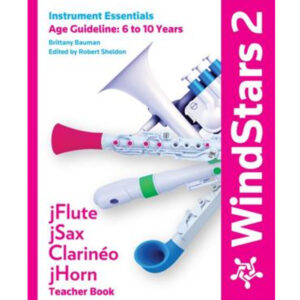
There are four instruments at this level including jFlute, jSax, Clarinéo and jHorn. These more advanced NUVO pre-band instruments are designed with smaller hands in mind and made of durable materials that can stand up to being dropped while also being incredibly lightweight. As a bonus, the instruments are 100% waterproof making them super easy to sanitize and can even be shared between classes. All four of these instruments are pitched in C, so transposition is not an issue, but students will still learn true instrument fingerings. Other instrumental skills learned that will transition to full-sized band instruments include embouchure, air support and proper playing position. It is encouraged for students to try at least two different instruments. This provides both the student and teacher with valuable information about whether or not each instrument could be a good fit for them in the beginning band. Most students can transfer from their pre-band instrument to a full-sized band instrument within a single lesson.
 The WindStars 2 pre-band curriculum was written specifically for the jFlute, jSax, Clarinéo, and jHorn instruments. There is a teacher book along with students’ books for each instrument. There are two versions of the jHorn student book in treble or bass clef and you can teach both trumpet and baritone fingerings with the same instrument.
Why Our Students Need Pre-Band
I have seen first-hand how pre-band can support students and grow (or start) instrumental music programs. Pre-band instruments help students build confidence playing a wind instrument where a full-sized instrument can often be intimidating. Educators report reduced stress because of the durability of the instruments and ease of making simple repairs. The WindStars curriculum was written by music educators and engages all learning modalities. Learning an instrument can be fun and explorative!

I have talked with hundreds of pre-band teachers across the United States over the past few years and on average, teachers have seen a 30% growth in their beginning band numbers within just one year of starting a pre-band program. Student testimonials from pre-band show that students are enjoying their experiences and feel invested in their learning. Teachers are amazed how easy it is to incorporate a program into their general music class and/or transition students to full-sized band instruments. Pre-band has allowed schools across the globe to build, or start, larger instrumental music programs.
How To Get Started
 NUVO has created a free virtual pre-band teacher training which consists of a series of videos that you can watch at your own pace. This training includes detailed information about all of the instruments and specific teaching strategies. Optional certification is also available for a small fee. You can learn more about WindStars teacher training here: https://www.nuvo-windstars.com/teacher-training-intro. WindStars also offers in-person teacher training. Email me for more information.
If you are curious about starting a pre-band program and want to learn more or have already started a program, I would love to connect with you. I believe that pre-band can revolutionize how we prepare students for instrumental success before they even step foot into a band room. Plus, all of my students will tell you that these instruments are fun, and who doesn’t need more of that in their life?